
What utilities are needed for micro brewery equipment installation?
A 15-barrel brewing installation requires a 3-phase 480V electrical service with at least 400 Amps to power chillers and pumps simultaneously. Steam-heated systems demand a boiler output of 1.2 million BTU/hr, while water infrastructure must support a 6:1 water-to-beer ratio through a 2-inch copper main at 60 PSI. Effluent management requires trench drains sloped at 1/4 inch per foot to handle discharge with pH levels ranging from 2.0 to 12.0. Cooling depends on a propylene glycol loop maintained at -4°C, requiring a chiller sized for 25% buffer capacity over the total cellar volume.
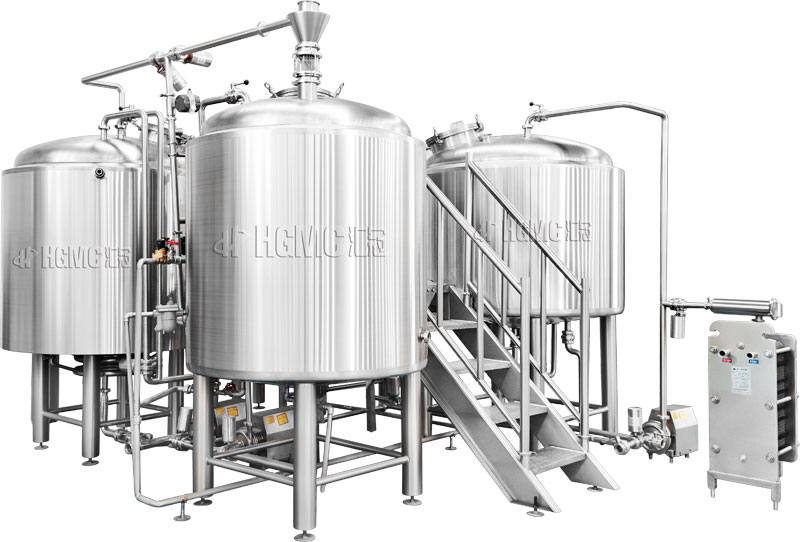
Integrating micro brewery equipment into a commercial space starts with a structural assessment of the slab, which must support loads exceeding 250 lbs per square foot. Standard 4-inch concrete floors often fail under the weight of a full 30-barrel fermenter, leading to catastrophic shifting or plumbing ruptures over time. By reinforcing the production area with 6-inch thick 4000 PSI concrete, owners prevent the structural fatigue that accounts for 12% of facility maintenance costs in the first five years.
Properly reinforced floors facilitate the installation of stainless steel trench drains, which are necessary for managing the 300 to 500 gallons of water used during a single wash-down cycle. These drains must lead to a grease trap or a solids interceptor to catch spent grain husks and hop trub that bypass the initial filtration stages. Without a 1,000-gallon equalization tank to normalize temperature and pH, municipal water authorities often levy fines that can reach $5,000 per violation in urban districts.
"Discharge water from a whirlpool can exceed 90°C, which is high enough to melt standard PVC sewer lines if not pre-diluted or cooled via a heat exchanger."
Managing these thermal outputs leads to the design of the electrical grid, specifically the high-voltage requirements for centrifugal pumps and glycol compressors. Most industrial refrigeration units for brewing require 208V or 480V 3-phase power to maintain a consistent 35% glycol-to-water ratio in the cooling loop. A study of 200 craft breweries in 2024 showed that facilities using 3-phase motors reduced their electrical consumption by 15% compared to those using single-phase converters.
| Utility Component | Requirement Specification | Operational Purpose |
| Water Main | 2-inch diameter | Rapid HLT filling (< 30 min) |
| Steam Boiler | 15 PSI (Low Pressure) | Uniform wort boiling |
| Natural Gas | 1,500,000 BTU total | Simultaneous heating loads |
| CO2 Storage | 750 lb Bulk Tank | Carbonation and tank purging |
Electrical reliability is paired with the natural gas infrastructure, which must supply enough pressure to run a 40-horsepower boiler without starving other gas appliances. A 10-barrel brewhouse typically consumes 4.5 to 5.0 therms of natural gas per barrel of beer produced, depending on the efficiency of the kettle's steam jacket. Older gas meters often lack the flow capacity for high-capacity burners, necessitating an upgrade to a high-pressure rotary meter to avoid flame-outs during the vigorous boil phase.
Efficient gas combustion relies on the ventilation system, where an exhaust fan must move at least 2,000 cubic feet per minute (CFM) per kettle to remove steam and combustion byproducts. Excessive humidity from the boil can lead to mold growth on the ceiling, a factor that caused 8% of breweries to fail health inspections in a 2023 industry survey. Stainless steel condensation hoods with integrated drains capture the moisture and direct it to the floor drains, keeping the air quality within OSHA safety standards.
"The installation of an automated steam modulating valve can reduce gas waste by 22% by precisely scaling the flame to the liquid volume in the kettle."
Beyond steam and gas, the facility requires a steady supply of oil-free compressed air to drive pneumatic valves and the automated controls of a canning line. Standard air compressors release micro-particles of oil that ruin the head retention of beer, making ISO 8573-1 Class 0 certified compressors a requirement for quality control. Since 2019, the adoption of pneumatic actuators in micro-breweries has increased by 35%, as they provide more reliable torque for butterfly valves than manual handles.
Clean air systems are installed alongside bulk CO2 storage tanks, which provide the pressure needed to transfer beer from the cellar to the taproom or packaging line. A single 50-lb CO2 cylinder is rarely sufficient for a brewery producing more than 500 barrels annually, leading to frequent downtime during gas swap-outs. Upgrading to a vacuum-insulated bulk tank reduces gas costs by 40% by eliminating the residual gas wasted in the bottom of small cylinders and reducing the delivery frequency.
| Utility Type | Peak Demand Level | Connection Size |
| Electricity | 800 Amp Service | NEMA 4X Panels |
| Compressed Air | 10 CFM @ 90 PSI | 1/2-inch NPT |
| Propylene Glycol | 50 GPM Flow Rate | 1.5-inch Insulated Pipe |
| Potable Water | 60 PSI Constant | 2-inch RPZ Valve |
The stability of the CO2 supply ensures that the dissolved oxygen levels remain below 20 parts per billion, preventing the oxidation that shortens a beer's shelf life. Maintaining this gas pressure requires high-grade braided hoses and stainless steel manifolds that can withstand the 30 PSI pressures used during tank carbonation. A leak as small as 1/16th of an inch in a gas line can result in the loss of $200 worth of gas per month, emphasizing the need for professional pressure testing during setup.
High-pressure gas systems are the final piece of the utility puzzle before the final commissioning of the brewing vessels. Before the first batch is brewed, every pipe and wire must undergo a 24-hour stress test to ensure there are no leaks in the glycol lines or shorts in the control panels. This rigorous startup procedure ensures that the $250,000 to $1,000,000 investment in hardware is protected from the environmental stressors inherent in a high-moisture, high-heat production environment.