
What is aluminum made of at the molecular and mineral level?
Aluminum exists as a metallic element with atomic number 13, extracted primarily from bauxite ore. At the mineral level, bauxite contains aluminum hydroxides such as gibbsite ($Al(OH)_3$), boehmite, and diaspore ($AlO(OH)$). Industrial refinement uses the Bayer process to separate alumina ($Al_2O_3$) from these ores, followed by the Hall-Héroult smelting process to produce metallic aluminum. At the molecular level, atoms arrange into a face-centered cubic (FCC) crystal lattice. This geometry dictates the metal's malleability and density. Investigating what is aluminum made of involves tracing this evolution from geological hydroxide ores to the purified metallic lattice structure.
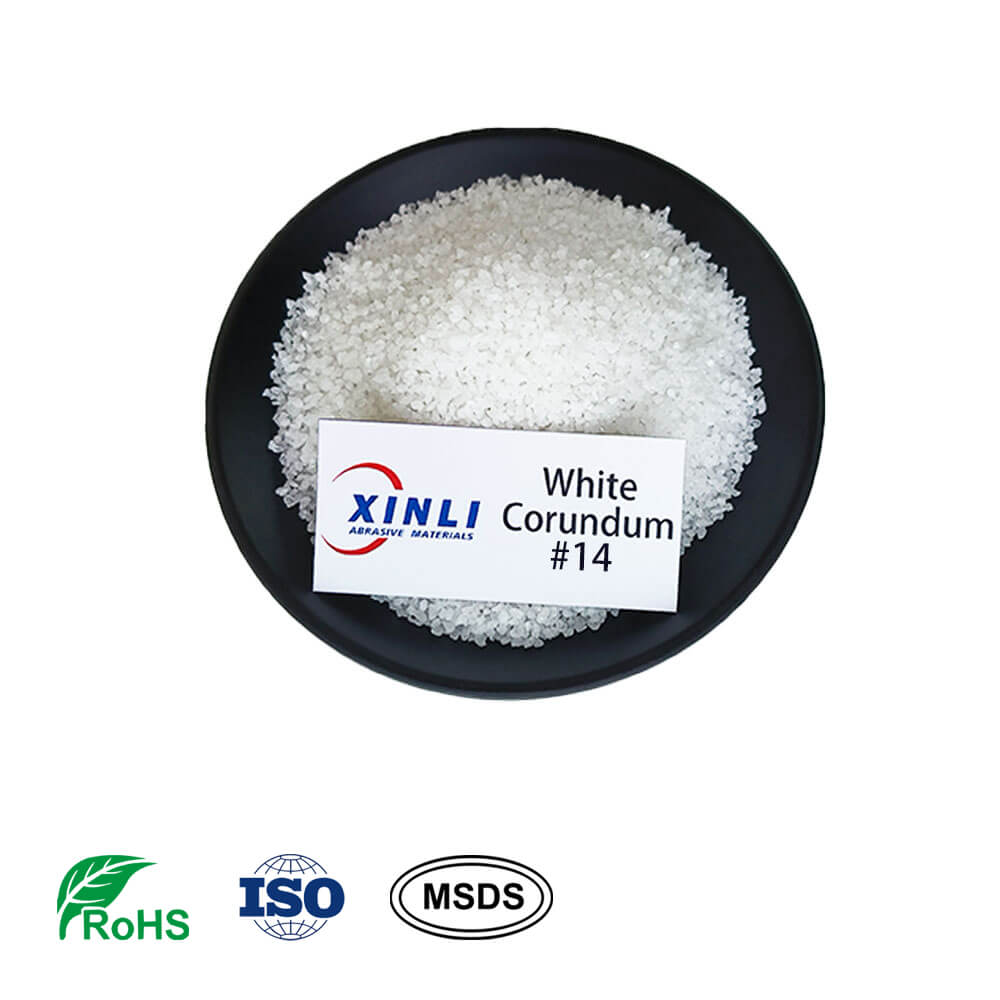
Bauxite ore serves as the primary geologic source for global production. It typically consists of a mixture of gibbsite, boehmite, and diaspore, often found in tropical regions due to the intense weathering of silicate rocks over millions of years.
These minerals contain varying concentrations of aluminum hydroxide, usually ranging between 40% and 60% alumina ($Al_2O_3$). Miners extract these deposits through open-pit operations that shift millions of tons of earth annually.
The Bayer process refines this ore into pure alumina by dissolving it in a concentrated sodium hydroxide solution at temperatures between 140°C and 240°C. This chemical digestion effectively separates the aluminum components from iron oxides and silica impurities.
The resulting liquor contains dissolved sodium aluminate, which is then cooled to induce the precipitation of aluminum hydroxide crystals. These crystals represent the intermediate step before thermal conversion.
During calcination, the aluminum hydroxide undergoes thermal decomposition in a rotary kiln at temperatures exceeding 1,000°C. This process drives off chemically bound water molecules to produce anhydrous alumina powder.
The alumina is then transported to electrolytic smelters for the final phase of production. The Hall-Héroult process, patented independently by Charles Martin Hall and Paul Héroult in 1886, remains the standard method for metal isolation.
In this electrolytic bath, alumina dissolves in molten cryolite ($Na_3AlF_6$) at approximately 950°C. An electric current passes through the bath, splitting the alumina into liquid aluminum metal and oxygen gas, which reacts with carbon anodes.
At the atomic scale, solid aluminum exhibits a face-centered cubic (FCC) crystal structure. This arrangement features atoms at each corner and the center of every face of the unit cube, creating a stable lattice geometry.
With an atomic radius of 143 picometers, the atoms pack efficiently with a coordination number of 12. This geometric configuration prevents the formation of brittle phases and allows for significant material ductility during mechanical deformation.
Metallic bonding within this lattice involves the release of three valence electrons per atom. These electrons become delocalized, forming a conductive sea of charge carriers that move freely throughout the metal structure.
This electron mobility explains the high thermal and electrical conductivity of the metal, even when compared to heavier transition elements. The lattice structure also facilitates the slide of atomic planes, providing signature malleability.
Aluminum has a density of approximately 2.70 $g/cm^3$ at 20°C, roughly one-third the density of steel. This low mass arises from the atomic weight of 26.98 u and the relatively open nature of its crystal lattice.
When exposed to ambient air, the surface of the aluminum reacts almost instantaneously with oxygen. This forms a thin, dense layer of aluminum oxide ($Al_2O_3$) that is approximately 2 to 4 nanometers thick.
This passivation layer acts as a barrier, preventing further oxidation and giving the metal its inherent corrosion resistance. Without this microscopic oxide skin, pure aluminum would react rapidly with atmospheric moisture.
Alloys often introduce other elements like magnesium, silicon, or copper into the lattice to modify mechanical properties. For example, the 6061 alloy series incorporates magnesium and silicon to increase tensile strength to roughly 290 MPa.
These alloying elements occupy interstitial sites or form precipitates within the FCC structure. These additions disrupt the movement of dislocations, which increases the hardness and structural integrity of the final material.
Understanding the molecular stability of these alloys involves analyzing the interaction between the aluminum lattice and the added solutes. These modifications allow engineers to tailor the material for specific structural demands.
Industrial applications prioritize high-purity aluminum (99.5% purity or higher) for electrical conductors. These grades minimize solute content to reduce electron scattering and maximize current flow efficiency.
The thermal expansion coefficient of aluminum is approximately $23.1 \times 10^{-6} / ^\circ C$. This value dictates the design of mechanical joints and fasteners to accommodate dimensional changes during temperature fluctuations.
In the molten state, the FCC lattice collapses, and atoms move randomly while maintaining short-range order. This liquid phase transition remains necessary for casting, where the metal fills complex molds during solidification.
During casting, cooling rates often reach 100°C per second in die-casting operations. This rapid cooling influences the grain size and morphology, which affects the final strength and surface finish of the cast product.
Each gram of aluminum produced typically requires between 13 and 15 kilowatt-hours of electricity. This high energy demand reflects the difficulty of breaking the strong chemical bonds found in alumina during the electrolysis stage.
Recycling aluminum consumes roughly 5% of the energy required for primary production from bauxite. The metal retains its metallic properties regardless of how many times it undergoes the melting and casting cycle.
At the molecular level, recycled aluminum maintains the same FCC structure as primary metal. Impurities are typically removed through fluxing, where salts are added to the melt to bind with and separate non-metallic contaminants.
Future development in aluminum technology focuses on additive manufacturing processes. By using laser powder bed fusion, engineers can control the solidification of aluminum alloys at the micron scale.
This precision allows for the creation of components with complex geometries that would be impossible to cast using traditional methods. The atomic packing remains consistent, but the microstructure can be optimized for specific stress loads.
Introduction: The Atomic Foundations of Aluminum
Aluminum (atomic number 13) serves as a critical component in global infrastructure due to its specific electronic configuration ($[Ne] 3s^2 3p^1$). Its capacity for physical performance is derived from the low ionization energy of its valence electrons, which allows for the formation of a delocalized electron cloud within a stable face-centered cubic lattice. At 20°C, pure aluminum exhibits a density of $2.70 \, \text{g/cm}^3$, providing a high strength-to-weight ratio that remains unrivaled by traditional ferrous alloys. The mineral feedstock, primarily bauxite, contains high concentrations of gibbsite ($Al(OH)_3$), which undergoes the Bayer process to yield alumina ($Al_2O_3$). This powder is subsequently reduced via the Hall-Héroult electrolytic process, an industry standard since 1886. The resulting metal possesses an atomic radius of 143 pm and a coordination number of 12, allowing for significant lattice strain tolerance. Surface-level interactions involve the formation of an oxide layer roughly 2 to 4 nanometers thick, which provides inherent protection against chemical degradation. By integrating alloying elements such as magnesium and silicon, engineers manipulate the FCC lattice to achieve tensile strengths exceeding 290 MPa. This ability to tailor the material at the molecular level ensures its continued dominance in aerospace and electrical transmission sectors.